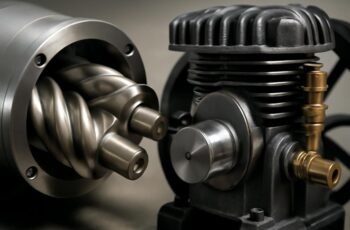
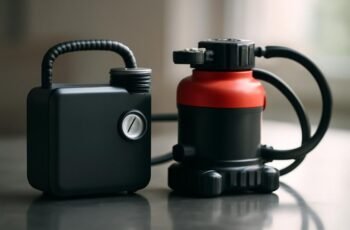
When choosing between oil-lubricated and oil-free air compressors, understanding their fundamental differences is essential for making an informed decision. Each type offers distinct advantages and limitations that impact performance, maintenance, and overall cost. By analyzing their operational mechanisms and suitability for specific applications, we can better assess which option aligns with your operational needs and long-term goals. Let’s explore these differences to determine the best fit for your environment.
Key Takeaways
- Oil-lubricated compressors offer longer durability and are suitable for heavy-duty, continuous industrial applications.
- Oil-free compressors provide higher air purity, ideal for sensitive environments like healthcare and food processing.
- Oil-lubricated units require regular oil changes and maintenance, while oil-free models have simpler upkeep but potentially higher parts replacement costs.
- Oil-lubricated systems generally have a higher initial cost but may be more economical over time due to longer service intervals.
- Oil-free compressors eliminate fire hazards and oil contamination risks, enhancing safety and compliance in clean or regulated environments.
What Are the Main Differences Between Oil-Lubricated and Oil-Free Compressors?
Have you ever wondered how oil-lubricated and oil-free compressors fundamentally differ in operation? The key distinction lies in their lubrication methods. Oil-lubricated compressors rely on oil to reduce friction and wear, with oil separation systems ensuring that oil remains separated from compressed air before delivery. This process maintains compressor longevity and performance. Conversely, oil-free compressors eliminate oil altogether, using specialized materials or coatings to avoid contamination issues, which can simplify maintenance and improve air purity. Warranty coverage also varies; oil-lubricated units often have broader coverage due to their proven durability, whereas oil-free models might have limited warranties because of their reliance on advanced materials. These differences influence operational efficiency, maintenance, and suitability for specific applications.
How Do Oil-Lubricated Air Compressors Work and What Are Their Benefits?
Oil-lubricated air compressors operate by circulating oil within the compression chamber to reduce friction and dissipate heat, ensuring smooth and efficient operation. The lubrication process provides benefits such as extended component lifespan and improved reliability under continuous use. Understanding these mechanisms helps clarify why oil-lubricated systems are preferred in demanding industrial applications.
Lubrication Process Overview
How exactly does the lubrication process in oil-lubricated air compressors function, and what advantages does it offer? These compressors rely on oil viscosity to create a thin, consistent film that reduces metal-to-metal contact within moving parts, such as pistons and bearings. This film minimizes wear and dissipates heat effectively. Proper lubrication intervals are critical to maintaining optimal oil quality; overdue intervals can lead to increased friction and potential damage. The oil also helps seal the compression chamber, improving efficiency. By ensuring the oil remains within specified viscosity ranges, we sustain smooth operation and reduce maintenance costs. Overall, this precise, controlled lubrication process enhances durability and performance, making oil-lubricated compressors suitable for demanding industrial applications.
Advantages of Oil-Lubrication
What makes oil-lubricated air compressors particularly advantageous in industrial settings is their ability to provide consistent, reliable performance through effective lubrication. The oil lubrication in these compressors reduces friction between moving parts, minimizing wear and extending component lifespan. The lubrication process ensures smooth operation under high loads and continuous use, maintaining optimal efficiency. Additionally, oil lubrication helps dissipate heat generated during compression, preventing overheating and potential damage. This results in stable pressure output and lower maintenance requirements over time. The lubrication process also acts as a sealant, reducing internal leakage and enhancing overall performance. These benefits make oil-lubricated compressors ideal for demanding applications where reliability, durability, and efficiency are critical.
What Are the Advantages of Oil-Free Air Compressors for Clean Environments?
Have you considered the critical importance of air purity in environments such as pharmaceuticals, food processing, or electronics manufacturing? Oil-free air compressors markedly reduce contaminants risk, ensuring the delivered air remains free of oil particles and other impurities. This is essential for maintaining strict hygiene standards and product integrity. Additionally, oil-free systems enhance electrical safety by eliminating oil-related fire hazards or electrical malfunctions caused by oil contamination. They also require less maintenance related to oil filtration and disposal, providing more consistent, reliable operation in clean environments. Overall, these advantages support compliance with strict industry regulations and help prevent product contamination, making oil-free compressors a vital choice for applications demanding the highest levels of air purity and operational safety.
Which Applications Are Best Suited for Oil-Lubricated Compressors?
Oil-lubricated compressors are ideal for heavy-duty industrial applications and environments requiring continuous operation, where durability and consistent performance are critical. Their robust design ensures long-term reliability under demanding conditions, reducing downtime and maintenance costs. We’ll explore how these features make them the preferred choice for such high-intensity applications.
Heavy-Duty Industrial Use
When considering heavy-duty industrial applications, oil-lubricated air compressors stand out due to their durability and ability to handle continuous, high-demand operations. They excel in sectors such as manufacturing, automotive assembly, and power generation, where consistent, reliable airflow is critical. Their robust construction ensures longevity under demanding conditions, reducing downtime. Unlike unrelated topic1, where quick turnover is prioritized, these compressors sustain prolonged use. They also support complex processes like pneumatic conveying or large-scale painting, where high volumetric output is essential. Oil lubrication minimizes wear and maintains optimal compression, making them ideal for environments requiring continuous operation. While oil-free units may suit lighter tasks, heavy-duty industrial use demands the resilience provided by oil-lubricated systems, especially when consistent performance and operational longevity are non-negotiable.
Continuous Operation Environments
Continuous operation environments demand reliable, durable compression systems that can maintain performance over extended periods without frequent maintenance or downtime. Oil-lubricated compressors excel here, offering heavy-duty, maintenance-free operation essential for continuous use. They are ideal for applications like manufacturing, chemical processing, and power plants, where consistent output and longevity are critical. Their design minimizes wear and tear, ensuring less vibration and noise, and supporting extended runtimes. The table below highlights key features relevant to continuous environments:
| Feature | Oil-Lubricated | Oil-Free |
|---|---|---|
| Maintenance | Low | Higher |
| Durability | High | Moderate |
| Suitability | Heavy-duty, continuous | Intermittent, portable |
| Cost | Higher upfront | Lower upfront |
| Longevity | Extended | Shorter |
When Should You Choose an Oil-Free Compressor Over an Oil-Lubricated One?
Determining the optimal choice between an oil-free and an oil-lubricated compressor depends heavily on specific operational requirements and environmental considerations. An oil-free compressor is ideal when contamination prevention is critical, such as in medical, pharmaceutical, or food processing applications, where purity standards are stringent. Its maintenance-free design minimizes downtime and reduces operational costs, making it suitable for facilities prioritizing reliability and ease of use. Additionally, in environments with strict regulations regarding oil emissions or where oil contamination could compromise product quality, an oil-free system offers a clear advantage. Conversely, when extended lifespan, higher efficiency, and durability are priorities, an oil-lubricated compressor might be preferable. Ultimately, the decision hinges on balancing environmental concerns, maintenance implications, and operational demands.
What Are the Maintenance Requirements for Each Compressor Type?
Have you considered how maintenance requirements differ substantially between oil-free and oil-lubricated compressors? Oil-lubricated units generally demand more rigorous maintenance schedules, including regular oil changes, filter replacements, and lubrication checks to ensure optimal performance. The lubrication types in these compressors necessitate consistent monitoring to prevent wear and overheating, which can lead to costly downtime. Conversely, oil-free compressors require less frequent maintenance; they eliminate the need for oil changes, relying instead on specialized coatings or dry-running components. However, they still need regular inspections of air filters and valves to maintain efficiency. Overall, oil-free units offer simplified maintenance schedules, reducing operational complexity, whereas oil-lubricated compressors demand meticulous attention to lubrication types and routine servicing for longevity.
How Do Costs Compare Between Oil-Lubricated and Oil-Free Compressors?
When comparing costs, the initial investment and ongoing expenses of oil-lubricated versus oil-free compressors often reveal significant differences. Oil-lubricated models typically require a higher upfront purchase price due to complex components like oil filters and lubrication systems. However, their lower operating costs stem from longer service intervals and durability. Conversely, oil-free compressors generally have lower initial costs but incur higher maintenance expenses, owing to more frequent part replacements and reduced lifespan. Interestingly, irrelevant topics, such as unrelated concept comparisons, can distract from core cost analysis, emphasizing the need for focus. Overall, while oil-lubricated compressors tend to be more economical over time, the choice depends on application-specific costs, maintenance, and operational demands.
What Factors Should You Consider When Selecting an Air Compressor?
What key factors should influence your choice of an air compressor to guarantee it meets your operational needs? Critical considerations include capacity, pressure, and maintenance requirements. Additionally, oil selection impacts lubrication efficiency and compressor longevity, especially in oil-lubricated models. Noise considerations are vital for workplace safety and comfort, influencing compressor placement and enclosure design. To aid decision-making, consider the following factors:
| Factor | Importance | Impact on Selection |
|---|---|---|
| Capacity & Pressure | Matches operational demands | Ensures efficiency and reliability |
| Oil Selection | Affects lubrication and durability | Influences maintenance cycle |
| Noise Considerations | Worker safety and comfort | Determines placement and type |
| Maintenance Needs | Operational uptime | Affects long-term costs |
Are There Any Drawbacks or Limitations to Each Compressor Type?
Each type of air compressor brings its own set of limitations that can influence operational decisions. With oil lubricated compressors, the main oil lubricated drawbacks include potential oil contamination, higher maintenance requirements, and increased downtime. Conversely, oil free limitations involve lower efficiency and the risk of higher noise levels due to design constraints. Specifically:
Choosing between oil-lubricated and oil-free compressors depends on balancing efficiency, maintenance, and noise considerations.
- Oil lubricated compressors risk oil carryover, which can compromise sensitive applications.
- Maintenance complexity increases with oil-based systems, requiring regular oil changes and filter replacements.
- Oil free compressors often operate at lower efficiency and may produce more noise, affecting workplace comfort and productivity.
Understanding these drawbacks helps in selecting the most suitable compressor for specific operational needs.
Frequently Asked Questions
How Long Do Oil-Lubricated Compressors Typically Last?
Oil-lubricated compressors typically last 10-15 years, depending on oil lubrication longevity and compressor lifespan factors like maintenance, operating conditions, and load. Proper care ensures optimal performance and extends their operational lifespan significantly.
What Environmental Factors Affect Compressor Performance?
Environmental factors like oil cleanliness, ambient temperature, vibration effects, and humidity control significantly influence compressor performance. We monitor these parameters closely, ensuring optimal operation and longevity by minimizing contamination, temperature fluctuations, vibration, and moisture-related issues.
Can Oil-Free Compressors Operate Continuously?
Yes, oil-free compressors can operate continuously with proper maintenance, ensuring oil-free air quality and reliability. Their design minimizes oil-related wear, making them suitable for applications requiring uninterrupted operation and consistent, contaminant-free air output.
How Does Noise Level Vary Between the Two Types?
We find oil-free compressors generally operate more quietly due to fewer moving parts and no lubrication noise, whereas oil-lubricated units can be louder. Maintenance differences influence noise levels, with oil-lubricated systems often requiring more mechanical adjustments and associated noise.
Are There Any Safety Concerns With Oil-Lubricated Compressors?
We prioritize safety, understanding oil lubrication’s risks like oil contamination and potential leaks. Regular maintenance minimizes oil lubrication safety concerns, ensuring safe operation while monitoring for oil contamination risks to protect both users and equipment efficiently.
Conclusion
In summary, choosing between oil-lubricated and oil-free compressors depends on your specific needs, such as air purity and maintenance capacity. Notably, oil-free compressors account for nearly 60% of the market in industries demanding high-purity air, highlighting their growing importance. By carefully analyzing operational costs, environmental factors, and application requirements, you can make an informed decision that optimizes performance and cost-efficiency, ensuring your system aligns with both technical demands and long-term sustainability.