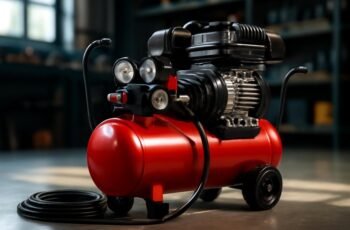
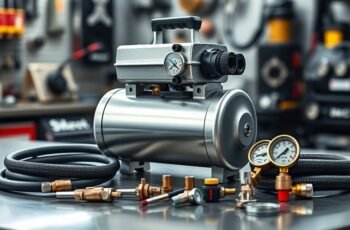
Did you know that the efficiency of your air compressor largely depends on the quality of its accessories? While many focus on the compressor unit itself, choosing the right filters, hoses, and nozzles can substantially impact performance and longevity. Understanding the technical differences among top-rated options ensures the best results. As we compare these accessories, you’ll discover key features that could enhance your system’s efficiency and reduce downtime, making it crucial to select wisely.
Key Takeaways
- Compare accessory durability, material quality, and compatibility with various air compressor models for long-term reliability.
- Evaluate performance features like airflow capacity, nozzle types, and pressure ratings to ensure optimal task efficiency.
- Consider organization solutions such as storage racks and labeled compartments to enhance workspace safety and accessibility.
- Assess accessories’ ease of use, including quick-connect fittings and adjustable components for streamlined operation.
- Review customer ratings and reviews to identify top-rated accessories based on real-world performance and user satisfaction.
What Are the Essential Air Compressor Accessories to Know?
Understanding the essential air compressor accessories is critical for optimizing performance and guaranteeing safety during operation. Key accessories like pressure regulators and safety valves maintain ideal pressure levels, reducing the risk of equipment failure and enhancing air compressor safety. Filters and moisture separators are indispensable for minimizing environmental impact by removing contaminants that could damage components or lead to inefficient operation. Additionally, gauges provide real-time monitoring, enabling precise control and preventing over-pressurization. Properly selected accessories streamline workflow, improve efficiency, and uphold safety standards. Awareness of these components helps operators minimize environmental impact and avoid hazards associated with improper use. Overall, integrating essential accessories ensures a safer, more sustainable, and efficient air compression system.
How Do You Choose the Right Air Hose for Your Needs?
Selecting the appropriate air hose is fundamental to guaranteeing ideal compressor performance and safety. To do this effectively, we assess air hose durability, which determines how well the hose withstands wear, pressure, and environmental factors over time. Flexible pipe options are essential, as they influence maneuverability and ease of use in various workspaces. When choosing, consider the hose’s material composition—reinforced rubber or thermoplastic for enhanced durability—and the diameter and length needed for your specific tasks. Properly rated pressure capacity ensures safety and prevents blowouts. Flexibility minimizes fatigue during extended use, reducing the risk of cracks or leaks. Ultimately, a well-chosen air hose balances durability with flexible pipe options, optimizing both safety and efficiency in your pneumatic operations.
Which Nozzles and Attachments Maximize Your Air Tool Performance?
Choosing the right nozzles and attachments is essential for maximizing the efficiency and effectiveness of your air tools. Different nozzle types, such as conical, flat, or specialized high-flow designs, optimize airflow for specific tasks, reducing energy loss and improving performance. Attachment uses vary widely, from precision spray nozzles for controlled applications to wide-angle nozzles for rapid coverage. Selecting appropriate nozzles depends on understanding airflow requirements, pressure tolerances, and the intended operation. Proper attachments minimize air waste and enhance tool control, leading to better results and longer equipment life. Analyzing nozzle types and attachment uses ensures you match the accessory to your task, boosting productivity and operational precision. This targeted approach guarantees your air tools operate at peak performance levels.
What Features Should You Look for in a Quality Air Filter?
When evaluating air filters for your equipment, focusing on key features can considerably impact performance and longevity. Essential factors include filter material options, which determine filtration efficiency and durability. High-quality filters often utilize multi-layer media or pleated designs to maximize surface area, improving dirt retention and reducing pressure drops. Additionally, ease of air filter maintenance is critical; filters that are simple to replace or clean minimize downtime and ensure consistent operation. A good air filter should also have a robust seal to prevent unfiltered air bypass, maintaining system integrity. Selecting filters with appropriate micron ratings ensures debris is effectively captured without restricting airflow excessively. Overall, understanding these features enables better choices, optimizing both compressor performance and lifespan.
How Can a Regulator Improve Your Air Compressor Efficiency?
A regulator enables precise pressure control, ensuring ideal operation and reducing stress on system components. By maintaining consistent pressure levels, it minimizes system wear and extends equipment lifespan. Additionally, improved pressure regulation enhances energy efficiency by preventing unnecessary compressor load and power consumption.
Precise Pressure Control
Implementing a regulator allows us to maintain exact pressure levels within the air compressor system, which directly enhances efficiency. By ensuring pressure stability, regulators prevent fluctuations that can cause inconsistent tool performance and energy wastage. Precise pressure control also improves calibration accuracy, ensuring the system operates at ideal settings. This consistency minimizes the need for manual adjustments, reducing operator error and maintaining steady airflow. Additionally, stable pressure reduces the likelihood of pressure spikes that can damage components or lead to system downtime. As a result, regulators contribute to a more reliable and efficient air compressor system, maximizing energy use and prolonging equipment lifespan through accurate, controlled pressure management.
Reduced System Wear
Maintaining ideal pressure levels with a regulator directly reduces stress on the compressor’s internal components, thereby decreasing overall system wear. By preventing over-pressurization, regulators minimize strain on pistons and valves, extending equipment lifespan. Proper regulation also optimizes the cooling systems, preventing overheating that accelerates component degradation. Additionally, consistent pressure reduces the likelihood of pressure-related failures, enhancing safety gear effectiveness. Here’s a snapshot:
| Benefit | Impact |
|---|---|
| Reduced component stress | Less wear on pistons, valves, and cylinders |
| Improved cooling | Less heat buildup, prolonging system life |
| Safety gear efficiency | Safer operation due to stable pressure levels |
| System durability | Longer intervals between maintenance cycles |
This approach not only preserves the compressor’s integrity but also ensures safer, more efficient operation over time.
Enhanced Energy Efficiency
Ever wonder how regulating pressure can boost your air compressor’s energy efficiency? Using a regulator enables precise control over system pressure, minimizing unnecessary energy consumption caused by over-pressurization. By maintaining ideal pressure levels, we reduce the workload on the compressor, which directly translates to energy savings. Additionally, incorporating high-quality regulators can serve as a cost-effective equipment upgrade, improving overall system performance without major overhauls. Proper regulation prevents excess air use and reduces compressor cycling, lowering operational costs and extending equipment lifespan. This targeted approach ensures that energy is used efficiently, maximizing compressor operation and reducing waste. Ultimately, adopting advanced regulators enhances energy efficiency, making your system more sustainable and cost-effective over time.
Why Invest in an Oil/Water Separator, and Which Is Best?
Investing in an oil/water separator is vital for preventing equipment damage and maintaining ideal performance. By effectively removing contaminants, we guarantee the purity of the compressed air, which directly impacts the longevity of system components. Selecting the right separator involves analyzing efficiency, compatibility, and maintenance requirements to maximize overall operation.
Prevents Equipment Damage
Oil and water contamination in compressed air systems can cause significant damage to equipment, leading to costly downtime and repairs. Investing in an oil/water separator enhances air compressor safety by preventing these contaminants from reaching critical components, consequently reducing wear and tear. Such separators effectively remove residual moisture and oil, which can corrode internal parts and compromise system integrity. This not only extends the lifespan of the compressor but also minimizes the risk of sudden failures. Additionally, proper separation reduces environmental impact by preventing oily water from contaminating waste streams or the environment. Selecting the right separator ensures peak performance, safeguards equipment, and supports sustainable operation. Overall, investing in high-quality separation technology is essential for maintaining system reliability and environmental responsibility.
Ensures Air Purity
Maintaining air purity is essential for ideal compressor performance and the longevity of downstream tools and processes. An oil/water separator plays a critical role in ensuring air quality by removing moisture and oil contaminants that can compromise system efficiency. Contamination prevention is vital, as moisture and oil carry particles that can cause corrosion, reduce component lifespan, and impair product quality. Selecting the right separator involves evaluating filtration capacity, flow rate compatibility, and maintenance requirements. High-quality separators efficiently trap water and oil, preventing contamination from reaching sensitive equipment. By investing in effective oil/water separation, we enhance compressor reliability, reduce downtime, and maintain consistent air purity—crucial factors for best operation and long-term cost savings.
What Are the Top Air Compressor Lubricants for Longevity?
Selecting the right lubricant is essential for maximizing the lifespan and performance of your air compressor. Different lubricant types, such as synthetic oils, mineral oils, and semi-synthetic blends, offer distinct longevity benefits. Synthetic lubricants typically provide superior thermal stability, reduced oxidation, and lower evaporation rates, extending maintenance intervals and decreasing wear. Mineral oils, while more affordable, may require more frequent changes due to faster degradation. Semi-synthetic options strike a balance, delivering improved durability over mineral oils without the higher cost of synthetics. When choosing lubricants, consider viscosity, additive formulation, and compatibility with your compressor’s materials. Proper lubrication reduces friction, minimizes corrosion, and prevents component failure, ultimately ensuring sustained compressor efficiency and prolonged service life.
Which Storage Solutions Keep Your Accessories Organized and Accessible?
Organizing your air compressor accessories effectively guarantees quick access and reduces downtime during projects. Ideal storage organization involves selecting solutions that categorize and secure tools to prevent loss and damage. Modular storage bins and wall-mounted racks offer clarity in accessibility solutions, enabling immediate retrieval of essential components. Adjustable shelves and labeled compartments further enhance systematic arrangement, streamlining workflow. For portability, wheeled carts with dedicated compartments facilitate on-site access without disarray. Implementing a combination of these storage solutions ensures that accessories remain systematic and readily available, minimizing search time and operational delays. Ultimately, a well-structured storage system enhances efficiency, prolongs accessory lifespan, and maintains a clutter-free workspace. Proper storage organization is fundamental to maximizing the productivity and longevity of your air compressor accessories.
How Do You Maintain and Troubleshoot Common Air Compressor Accessories?
Regular maintenance and troubleshooting are essential for ensuring that air compressor accessories operate efficiently and have a long service life. Effective maintenance tips include regularly inspecting hoses and fittings for leaks, cleaning filters to prevent blockages, and lubricating moving parts to reduce friction. Troubleshooting guides recommend checking pressure levels, verifying power connections, and testing for abnormal noises or vibrations, which may indicate wear or damage. We should also monitor for corrosion or debris buildup, which can impair performance. Consistent inspection and timely replacement of worn components prevent costly failures. By adhering to these maintenance tips and troubleshooting strategies, we can optimize accessory lifespan, maintain consistent performance, and minimize downtime, ensuring our air compression system remains reliable and efficient over its service life.
What Are the Best Budget-Friendly Accessories Without Compromising Quality?
Even on a tight budget, it’s possible to find high-quality air compressor accessories that deliver reliable performance without unnecessary expense. When considering budget options, it’s essential to weigh quality trade-offs to ensure durability and efficiency. Cost-effective accessories like universal quick-connect fittings, steel-reinforced hoses, and basic moisture filters often provide an ideal balance of affordability and performance. However, lower-priced options may sacrifice some longevity or precision. To minimize trade-offs, prioritize accessories from reputable brands with positive reviews and consider materials that resist wear.
- Metal fittings over plastic for durability
- Basic moisture filters with replaceable cartridges
- Standard steel hoses instead of reinforced, costly variants
- General-purpose pressure regulators
- Widely compatible quick-connect couplings
Frequently Asked Questions
How Often Should I Replace or Upgrade My Air Compressor Accessories?
We recommend reviewing your maintenance schedule every six months or after significant use, considering compatibility considerations. Regular inspections help identify wear, ensuring best performance and safety, prompting upgrades when accessories no longer meet efficiency or safety standards.
Are There Specific Accessories Recommended for Industrial Versus Home Use?
They say, “know your tools,” and that’s essential for choosing accessories; for industrial use, prioritize durability and compatibility considerations, while home setups benefit from lighter, versatile options. Maintenance tips guarantee peak performance across all applications.
Can Accessories Be Used Interchangeably Between Different Air Compressor Brands?
Accessories often lack universal compatibility due to brand-specific fittings and standards; consequently, while some accessory versatility exists, we recommend verifying brand compatibility to guarantee proper fit and ideal performance across different air compressor brands.
What Safety Precautions Should I Follow When Using Various Accessories?
We always wear protective gear and double-check accessory compatibility to prevent disaster, because neglecting safety precautions can lead to catastrophic failures or injuries. Vigilant adherence ensures safe operation and maintains compressor longevity.
How Do Weather Conditions Affect the Performance of Air Compressor Accessories?
Weather impact profoundly influences accessory durability and performance; extreme temperatures cause material degradation or malfunction, while humidity fosters corrosion. We analyze these factors to optimize accessory selection, ensuring reliable operation across diverse weather conditions.
Conclusion
In selecting and maintaining air compressor accessories, we prioritize performance, durability, and efficiency. We evaluate filters for purity, hoses for flexibility, nozzles for precision, and storage for organization. We optimize air quality with regulators and lubricants, troubleshoot issues proactively, and balance cost with quality. By systematically analyzing each component’s role, we enhance system longevity, minimize downtime, and maximize productivity—ensuring our pneumatic tools operate at peak performance and deliver consistent, professional results.