Selecting the right air compressor tank requires careful analysis of your system’s airflow demands and operational parameters. We need to evaluate factors like tank size, material durability, and safety features to guarantee ideal performance and longevity. With numerous options and technical considerations involved, understanding how these elements interact is essential for making an informed choice that aligns with your specific industrial or DIY needs. Let’s explore the key aspects that govern an effective selection process.
Key Takeaways
- Determine your airflow needs (CFM) and usage duration to select the appropriate tank size for continuous operation.
- Choose the tank type and orientation (horizontal or vertical) based on space constraints and installation flexibility.
- Ensure the tank’s pressure rating matches or exceeds your system’s operating pressure for safety and efficiency.
- Select durable materials like steel or aluminum, with safety features such as relief valves, to prevent failure.
- Regularly inspect and maintain the tank to ensure longevity, safety, and optimal performance.
How Do Different Types of Air Compressor Tanks Work?
How do different types of air compressor tanks operate? The core distinction lies in tank design and the method of pressure regulation. Horizontal and vertical tanks differ primarily in installation flexibility, but both rely on a pressure switch to regulate output. The tank’s construction guarantees it can withstand specific pressure levels, which is critical during tank installation. Pressure regulation involves maintaining consistent output by controlling compressor activation cycles, preventing over-pressurization. Some tanks incorporate safety valves to vent excess pressure, ensuring safe operation. The internal volume determines how much compressed air can be stored before the compressor activates again. Understanding how these tanks operate helps us optimize pressure regulation and tank installation, ensuring reliable performance and safety in various applications.
What Size Air Compressor Tank Do You Need?
Determining the appropriate size for an air compressor tank hinges on understanding your specific air demand and operational requirements. Larger tanks provide a buffer during peak usage, reducing compressor cycling and enhancing efficiency. Consider these factors:
Choosing the right tank size reduces cycling, improves efficiency, and matches your specific air demand.
- Air flow rate needed for continuous operation, influencing tank capacity.
- Duration of use, determining if a larger tank ensures uninterrupted work.
- Space constraints for tank installation, balancing size with available area and noise reduction needs.
A properly sized tank minimizes compressor cycles, decreases wear, and aids in noise reduction. Accurate sizing is critical for peak performance and longevity. Oversized tanks may increase initial costs and space requirements, while undersized tanks risk insufficient airflow. Precise assessment ensures the tank meets demand without unnecessary bulk or expense.
Which Materials Are Best for Air Compressor Tanks?
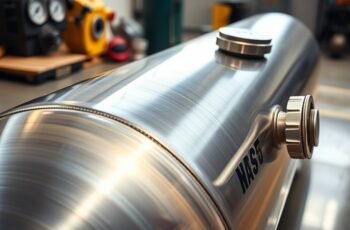
When selecting materials for air compressor tanks, we focus on durability and strength to withstand internal pressures over time. Corrosion resistance is also critical to maintain tank integrity, especially in humid or corrosive environments. Evaluating these factors helps guarantee long-term safety and performance of the tank.
Durability and Strength
Choosing the right material for an air compressor tank is essential to guarantee durability and strength under operational stresses. The material must withstand pressure fluctuations, resist fatigue, and minimize risks during tank maintenance. Metal options like steel and aluminum are preferred due to their high tensile strength, ensuring the tank maintains structural integrity over time. Steel tanks excel in load-bearing capacity, making them ideal for high-pressure applications, while aluminum offers lighter weight and ease of handling. The choice impacts pressure regulation, as a stronger material maintains consistent performance under cyclic stress, reducing the risk of deformation. Additionally, robust materials help prevent failure during pressure spikes, ensuring safety and longevity. Ultimately, selecting materials with proven durability directly benefits the tank’s operational lifespan and reliability.
Corrosion Resistance
Materials with high corrosion resistance extend the operational lifespan of air compressor tanks by preventing deterioration caused by environmental exposure and internal moisture. Selecting materials with inherent rust prevention qualities, such as stainless steel or aluminum, minimizes corrosion risk over time. These materials resist oxidation, reducing maintenance needs and ensuring structural integrity. Coating options, like epoxy or galvanization, further enhance rust prevention by creating a barrier against moisture and corrosive agents. Proper surface treatment is vital for environments with high humidity or exposure to chemicals, where corrosion accelerates. By combining corrosion-resistant materials with effective coating options, we can greatly prolong the tank’s service life, improve safety, and reduce long-term costs. This strategic approach ensures peak performance and durability in diverse operational conditions.
How to Ensure Compatibility With Your Air System
Ensuring compatibility between an air compressor tank and your existing air system requires careful assessment of technical specifications. First, verify that the tank’s pressure regulation capacity matches your system’s operating pressure to prevent over-pressurization. Second, confirm the tank’s volume aligns with your airflow demands, ensuring consistent pressure delivery. Third, consider noise reduction features; a compatible tank should integrate seamlessly, minimizing operational noise. Additionally, check for compatible fittings and connections to prevent leaks or pressure drops. Proper matching ensures optimal performance, minimizes system strain, and maintains safe operation. By assessing these key aspects—pressure regulation, volume, and noise reduction—you can select a tank that fits seamlessly within your system, ensuring reliability and efficiency over the long term.
What Safety Features Should You Look For?
When selecting an air compressor tank, prioritizing safety features is essential to prevent accidents and guarantee reliable operation. Key safety components include pressure safety mechanisms, which automatically release excess pressure to prevent tank rupture under over-pressurization. An effective pressure safety valve is indispensable, providing a fail-safe in case of regulator failure. Additionally, an emergency shutoff system enhances operational safety by immediately cutting power or airflow during abnormal conditions, reducing risks of damage or injury. These features ensure the tank maintains safe pressure levels and responds effectively to system anomalies. Incorporating reliable pressure safety devices and emergency shutoff mechanisms is critical for a safe, durable, and compliant air compressor setup, minimizing hazards associated with high-pressure systems.
How to Calculate the Right Capacity for Your Tasks
To determine the appropriate capacity for your air compressor tank, we must first analyze the specific demands of your tasks, including the required airflow and operational duration. Consider these factors:
- The total CFM (cubic feet per minute) needed for continuous tool operation.
- The duration of use without interruption.
- The impact of tank placement on efficiency and noise reduction.
A larger tank supplies air during peak demand, preventing pressure drops. Proper tank placement minimizes noise and vibration, enhancing operational stability. Calculating your airflow needs ensures the tank can sustain consistent performance, while strategic placement optimizes noise reduction. By assessing these parameters, you can select a tank that balances capacity with operational efficiency, ensuring your system functions reliably under load.
Common Mistakes to Avoid When Choosing a Tank
When selecting an air compressor tank, we must accurately assess capacity requirements to prevent system inefficiencies or shortages. Neglecting the material durability of the tank can lead to premature failure or safety hazards. Identifying and avoiding these common mistakes ensures a reliable, long-lasting setup.
Overlooking Capacity Needs
Have you accurately assessed your air demand before selecting a tank? Proper capacity planning is essential for effective storage optimization and ensuring consistent airflow. Underestimating your needs can lead to frequent compressor cycling, reduced efficiency, and increased wear. To avoid this, visualize your system’s demand as:
- A continuous flow during peak operation hours, requiring sufficient buffer volume.
- Short bursts of high demand, demanding quick response from the tank.
- Steady, low-demand periods, where excess capacity becomes redundant.
Ignoring Material Durability
Ignoring the durability of the tank material can lead to premature failure and costly downtime. Material fatigue, caused by repeated stress cycles, weakens the tank’s structural integrity over time. When selecting a tank, it’s essential to take into account manufacturing processes, as they influence material properties and resistance to fatigue. For instance, tanks produced with proper welding techniques and quality control are less prone to micro-cracks that accelerate deterioration. Neglecting these factors increases the risk of corrosion, cracks, and eventual rupture, especially under fluctuating pressures and environmental conditions. A thorough understanding of material behavior and manufacturing quality helps guarantee the tank’s longevity, safety, and performance. Ignoring these aspects can undermine system reliability and lead to significant operational costs.
How to Maintain Your Air Compressor Tank for Longevity
Regular maintenance of your air compressor tank is essential for ensuring its long-term performance and safety. Proper upkeep involves critical tasks:
- Air filter maintenance—regularly inspecting and replacing filters prevents debris buildup, maintaining ideal airflow and reducing strain on the system.
- Drain valve functionality—ensuring the drain valve operates correctly allows moisture to exit the tank, preventing corrosion and internal damage.
- Tank inspection—periodically checking for signs of rust or corrosion helps identify early deterioration, enabling timely intervention.
Frequently Asked Questions
How Often Should I Drain My Air Compressor Tank?
We recommend draining our air compressor tank weekly as part of our maintenance schedule, ensuring safety precautions by preventing moisture buildup. Regular drainage reduces corrosion risk and maintains ideal performance, aligning with best practices for compressor longevity and safety.
Can I Use a Used Air Compressor Tank Safely?
Using a used air compressor tank can be safe if we conduct thorough tank inspections and adhere to strict safety precautions, considering that over 60% of tank failures result from corrosion or fatigue. Proper assessment guarantees reliability and safety.
What Are Signs of a Failing Air Tank?
We notice signs of a failing air tank through tank corrosion, which weakens the structure, and a malfunctioning pressure gauge, indicating inconsistent pressure readings. Regular inspections help us identify these issues early and maintain safe operation.
How Does Altitude Affect Air Compressor Tank Performance?
Did you know that air density drops by approximately 1% for every 300 meters increase in altitude? Altitude effects mean pressure adjustments are essential, as lower air density reduces compressor efficiency, requiring calibration for peak performance at higher elevations.
Are There Specific Regulations for Air Compressor Tanks in My Area?
We review local regulations and safety standards to guarantee compliance with your area’s specific requirements for air compressor tanks. Adhering to these regulations guarantees safety, legality, and peak performance, so always consult your local authorities before installation or use.
Conclusion
In selecting the right air compressor tank, precision and foresight are essential—like balancing a delicate equation. While the tank must withstand pressure and meet capacity demands, overlooking factors like material durability or safety features can compromise system integrity. By applying analytical evaluation and understanding your specific needs, you guarantee reliable, efficient performance. Ultimately, meticulous planning transforms a simple component into a cornerstone of your system’s longevity and safety.