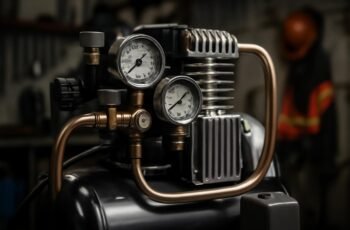
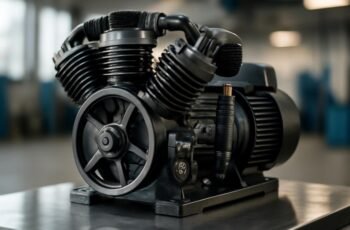
Imagine the steady hum of an air compressor powering your workspace, a sound that signifies efficiency but also demands precision in selection. As professionals, we recognize that choosing the right unit isn’t just about capacity but involves a detailed assessment of operational needs, safety features, and long-term costs. To guarantee your investment aligns with both your workload and budget, it’s essential to navigate the complexities of compressor types, specifications, and performance metrics. Let’s explore how to make an informed decision.
Key Takeaways
- Assess your airflow (CFM) and pressure (PSI) requirements to match compressor capacity with your needs.
- Consider noise levels, safety features, and ease of maintenance for workplace safety and efficiency.
- Choose the appropriate compressor type and size based on your application—light-duty, industrial, or continuous use.
- Evaluate specifications such as motor power, tank capacity, and duty cycle to ensure suitable performance.
- Budget for initial costs, operational expenses, and maintenance to ensure long-term affordability and reliability.
How to Determine Your Air Compressor Needs
Determining your air compressor needs begins with a precise assessment of your operational requirements. We analyze the required airflow, measured in CFM, and the pressure demands, in PSI, to guarantee the compressor can sustain continuous operation without overcapacity. Noise levels are a critical consideration; quieter models reduce workplace disruption and improve safety, especially in enclosed spaces. We also evaluate maintenance costs, which influence long-term operational expenses. Selecting a compressor with accessible parts and straightforward servicing can minimize downtime and costs. By accurately defining these parameters—airflow, pressure, noise, and maintenance—we can identify the most efficient, cost-effective compressor tailored to our specific application, preventing over- or under-specification, and ensuring ideal performance over its lifespan.
Key Factors to Consider When Choosing an Air Compressor
When selecting an air compressor, several key factors influence its suitability for your specific application. These include capacity, pressure output, and efficiency, which directly impact operational performance. It’s crucial to evaluate maintenance tips to guarantee long-term reliability; accessible components and ease of servicing can reduce downtime. Safety precautions are equally critical—consider features like pressure relief valves and protective guards to prevent accidents. Noise levels, energy consumption, and portability also affect suitability based on your workspace environment. Prioritizing these factors ensures ideal compressor performance and safety. By carefully analyzing these technical aspects, you can make an informed purchase decision that aligns with your operational demands and safety standards, ultimately enhancing productivity and equipment longevity.
Comparing Different Types and Sizes of Air Compressors
Have you considered how the different types and sizes of air compressors impact their performance and suitability for various tasks? Choosing between reciprocating, rotary screw, or centrifugal compressors depends on application demands, with each offering distinct maintenance tips and noise level considerations. For instance, reciprocating units are compact but generate higher noise levels and require regular oil and filter maintenance. Rotary screw models operate quietly and are ideal for continuous use but demand more complex maintenance routines. Larger sizes provide increased airflow capacity, essential for industrial operations, while smaller models suit light-duty tasks. Evaluating noise levels is vital for workplace comfort and compliance, and understanding maintenance tips helps guarantee longevity. Matching compressor type and size to specific needs optimizes efficiency and minimizes operational costs.
Essential Features and Specifications to Evaluate
To select the right air compressor, we must carefully assess its core features and specifications, as these directly influence performance, efficiency, and suitability for specific applications. Key parameters include CFM (cubic feet per minute) and PSI (pounds per square inch), which determine airflow capacity and pressure. We also evaluate motor power, tank size, and duty cycle to guarantee continuous operation without overheating. Maintenance tips are essential for long-term reliability; regular lubrication, filter checks, and drain valves prevent system failure. Safety considerations, such as pressure relief valves and proper grounding, are critical to prevent accidents. By thoroughly analyzing these features, we secure ideal performance while adhering to safety standards and minimizing downtime.
How to Budget for Your Air Compressor Purchase
Establishing an effective budget for your air compressor purchase requires a thorough understanding of both initial costs and ongoing expenses. A detailed cost analysis should include purchase price, installation, and maintenance costs.
- Initial investment: Evaluate compressor capacity and features aligned with your operational needs, considering the brand reputation for reliability and durability.
- Operational expenses: Account for energy consumption, lubricants, and consumables that impact long-term affordability.
- Replacement and maintenance: Factor in scheduled servicing, potential repairs, and lifespan estimates to prevent unexpected costs.
Frequently Asked Questions
What Maintenance Is Required to Keep an Air Compressor Running Efficiently?
We maintain efficiency by adhering to lubrication schedules, ensuring proper oil levels and quality, and replacing filters regularly to prevent contaminants. Consistent maintenance reduces wear, improves performance, and extends the compressor’s lifespan.
How Long Does an Average Air Compressor Typically Last?
On average, air compressors last 10-15 years, contingent on air quality and noise levels, which influence component wear; proper maintenance guarantees longevity, while monitoring these factors helps optimize performance and extend the unit’s operational lifespan.
Are There Environmental Considerations When Choosing an Air Compressor?
Yes, environmental considerations matter; we prioritize eco-friendly options with low emissions and energy efficiency. Emission reduction technologies help minimize our carbon footprint, ensuring sustainable operation without sacrificing performance, aligning with our commitment to responsible, eco-conscious choices.
What Safety Precautions Should I Follow When Operating an Air Compressor?
Did you know improper compressor use causes 25% of workplace accidents? We always wear safety gear, follow strict emergency procedures, and regularly inspect equipment to minimize risks, ensuring safe operation and preventing potential hazards effectively.
Can I Upgrade or Modify My Air Compressor Later?
Yes, we can upgrade or modify our air compressor later, considering upgrade options like adding a larger tank or higher capacity motor, but we must evaluate the modification potential carefully to maintain safety, efficiency, and warranty compliance.
Conclusion
In summary, precisely evaluating your operational requirements and understanding key specifications guarantees you select the right air compressor. For example, a manufacturing plant that underestimated its CFM needs faced prolonged downtime and increased costs. By conducting thorough evaluations and comparing options, you can optimize performance, safety, and cost-efficiency. This strategic approach minimizes risks and maximizes ROI, ultimately enabling you to meet current demands while accommodating future growth with confidence.