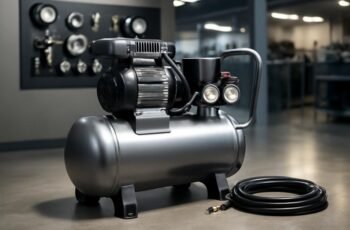
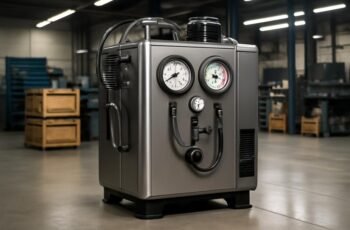
Studies show that nearly 70% of industrial maintenance teams rely on a combination of portable and stationary air compressors to meet diverse operational demands. Understanding the key differences between these types is essential for selecting the right equipment, especially when considering factors like mobility, capacity, and long-term costs. We’ll explore how each model fits specific applications, helping you make informed decisions to optimize performance and efficiency in your work environment.
Key Takeaways
- Portable compressors are lightweight, mobile, and quick to set up, ideal for on-the-go tasks; stationary units are larger, stable, and suited for continuous use.
- Portable models typically have lower power and capacity, while stationary compressors support higher workloads and longer operational durations.
- Stationary compressors are more energy-efficient and durable but tend to be noisier; portable units operate quietly but with less efficiency.
- Portable compressors are cost-effective upfront and suitable for confined spaces; stationary units are more expensive but better for heavy-duty, industrial applications.
- Maintenance is generally easier and more predictable with stationary compressors, whereas portable units prioritize convenience and quick connection.
What Are the Main Differences Between Portable and Stationary Air Compressors?
While both portable and stationary air compressors serve the fundamental purpose of generating compressed air, their primary differences lie in design, mobility, and application scope. Portable units emphasize mobility, featuring smaller sizes and integrated handles, but often sacrifice energy efficiency due to less optimized components. Stationary compressors prioritize stability and energy efficiency, typically utilizing larger, more advanced motors that minimize energy waste. Noise levels also differ markedly: portable compressors tend to produce higher noise due to their smaller, less soundproofed enclosures, making them less suitable for noise-sensitive environments. Conversely, stationary units are generally quieter because they incorporate sound-dampening features and are installed in controlled settings. These distinctions are vital when selecting a compressor aligned with specific operational needs and environmental constraints.
Which Applications Suit Portable Air Compressors Best?
Portable air compressors excel in on-the-go applications and small-scale projects where mobility and quick setup are essential. Their compact design allows for efficient operation in confined spaces and remote locations. Understanding these specific use cases helps determine when a portable compressor provides the most practical and cost-effective solution.
On-the-Go Uses
When considering on-the-go applications, portable air compressors excel in scenarios where mobility, quick setup, and versatility are essential. They are ideal for tasks like inflating tires, powering pneumatic tools, and maintaining air quality in remote locations. Their compact design minimizes noise levels, making them suitable for environments requiring low disturbance. Additionally, their portability allows for rapid deployment across various terrains, ensuring efficiency without sacrificing performance. Here’s a comparison of key features:
| Feature | Portable Compressor | Stationary Compressor | Application Focus |
|---|---|---|---|
| Air Quality | Maintains consistent quality | Often less adaptable | Remote or outdoor use |
| Noise Levels | Lower, suitable for quiet zones | Typically louder | Noise-sensitive environments |
| Mobility | High | Low | On-the-go tasks |
| Setup Time | Minimal | Longer | Rapid deployment |
Their adaptability makes portable compressors indispensable for versatile, on-the-go needs.
Small-Scale Projects
Small-scale projects often demand a level of flexibility and ease of use that portable air compressors provide, making them well-suited for tasks that require quick, efficient air delivery without the need for large, stationary equipment. These compressors excel in environments where air quality must be maintained, as their controlled output minimizes contaminants and guarantees cleaner airflow. Additionally, their lower noise levels are advantageous in settings where noise reduction is critical, such as indoor or confined spaces. Precise control over pressure and airflow makes portable units ideal for detailed tasks like finishing, small-scale assembly, or hobbyist applications. While their limited capacity may restrict heavy-duty use, their compact design and manageable noise levels make them the most suitable choice for versatile, small-scale projects.
When Should You Choose a Stationary Air Compressor?
When operational demands require continuous power, a stationary compressor guarantees reliable, steady airflow without interruption. Large-scale projects benefit from the higher capacity and durability of stationary units, supporting extended use and heavy workloads. Recognizing these factors helps determine when a stationary compressor is the most practical choice for your applications.
Continuous Power Needs
Determining the appropriate compressor type hinges on evaluating continuous power demands, as stationary air compressors are designed to sustain prolonged, high-volume operations without interruption. For applications requiring consistent airflow, a stationary compressor offers superior performance due to its robust power supply. Consider the following factors:
- Noise levels: Stationary units generally produce higher noise, making them suitable for enclosed environments with noise mitigation.
- Energy efficiency: They tend to operate more efficiently under continuous load, reducing operational costs over time.
- Operational stability: Stationary compressors maintain stable pressure and flow, critical for processes demanding uninterrupted power.
Choosing a stationary compressor is *ideal* when continuous, high-volume output is essential, and considerations around noise and energy efficiency align with operational priorities.
Large-Scale Projects
Are you managing a large-scale project that demands consistent, high-volume air output? Stationary compressors are essential when integrating hydraulic systems or supporting extensive industrial automation processes. They provide reliable, continuous power vital for sustained operation. Consider the table below:
| Criterion | Stationary Compressor |
|---|---|
| Capacity & Output | High, suitable for large-volume needs |
| Reliability & Maintenance | Designed for durability and minimal downtime |
| Integration & Scalability | Seamless with automated systems and hydraulic applications |
| Mobility | Limited; fixed installation primarily |
Choosing a stationary compressor ensures steady performance, minimizes operational interruptions, and supports complex systems requiring uninterrupted airflow, making it indispensable for large-scale industrial projects.
How Do Size, Power, and Capacity Compare?
Size, power, and capacity are fundamental factors that distinguish portable air compressors from stationary models. These elements directly impact efficiency comparison and noise levels, shaping their application scope. Portable compressors generally have smaller dimensions and lower power outputs, making them suitable for light-duty tasks but limiting their capacity. Conversely, stationary units are larger, with higher power ratings, supporting continuous operation and higher capacity demands. The key differences include:
- Size: Portables are compact; stationaries are bulkier.
- Power: Stationary models offer greater horsepower and airflow rates.
- Capacity: Stationaries sustain higher volume demands with enhanced efficiency and often produce more noise.
Understanding these distinctions helps determine the appropriate choice based on operational needs and noise considerations.
What Are the Cost Considerations for Each Type?
While initial purchase price is a key factor, ongoing operational and maintenance costs substantially impact the total expense of portable versus stationary compressors. Portable models often have lower upfront costs but may incur higher energy expenses due to less optimized energy efficiency, increasing long-term power consumption. Stationary compressors typically feature advanced designs that enhance energy efficiency, reducing operational costs over time. Noise levels also influence costs indirectly; quieter units, common in stationary models, may require additional soundproofing or specialized enclosures, adding to initial and maintenance expenses. Maintenance frequency and parts replacement are generally more predictable and cost-effective with stationary units due to their stabilization and durability. Ultimately, evaluating energy efficiency and noise profiles is essential for accurate total cost assessment between the two compressor types.
How Easy Is Mobility and Setup for Portable Models?
Portable air compressors are designed for ease of movement and quick setup, making them ideal for tasks that require flexibility. Their compact design enhances mobility, allowing users to transport them effortlessly across job sites. Setup typically involves minimal assembly, often just connecting power sources and hoses. Design flexibility is a key advantage, with lightweight frames and ergonomic handles facilitating movement. Noise levels are generally lower compared to stationary models, which is beneficial in noise-sensitive environments.
Key considerations include:
- Lightweight construction with integrated handles
- Minimal setup time, often under five minutes
- Reduced noise output for quieter operation
This combination of features guarantees portability doesn’t come at the expense of convenience or environmental considerations, making these models suitable for diverse, on-the-go applications.
Which Air Compressor Type Offers Better Longevity and Maintenance?
Although both portable and stationary air compressors require regular maintenance, stationary models generally offer better longevity due to their robust construction and design for continuous operation. Stationary units typically feature heavy-duty components, thicker casings, and higher-quality materials, which contribute to extended lifespan. Warranty coverage for stationary models is often more extensive, reflecting their durability and capacity for prolonged use. Maintenance becomes more straightforward with stationary compressors, as their fixed placement allows easier access to parts and routine checks. Noise levels are usually higher in stationary units, but their consistent performance and reduced wear and tear mean fewer repairs over time. Overall, stationary compressors tend to provide a longer service life with lower maintenance frequency, making them a more durable choice for demanding applications.
Frequently Asked Questions
What Safety Precautions Should I Follow With Each Compressor Type?
Ever wondered how to stay safe around compressors? We follow strict maintenance routines and guarantee user training, emphasizing proper handling, regular inspections, and safety gear to prevent accidents and maintain ideal, secure operation of both portable and stationary units.
How Do Noise Levels Compare Between Portable and Stationary Models?
We find that stationary compressors generally produce higher noise levels, but sound insulation and noise reduction features considerably mitigate this. Portable models tend to be quieter, making them more suitable for environments where noise control is critical.
Can Portable Compressors Handle Continuous Heavy-Duty Tasks?
Absolutely, portable compressors can handle continuous heavy-duty tasks thanks to their portable power and heavy-duty capacity. However, their efficiency depends on design specifics; some models may struggle under prolonged, demanding workloads, unlike stationary counterparts designed for constant, intensive use.
What Are the Environmental Impacts of Each Compressor Type?
We find portable compressors generally have higher energy consumption and a larger carbon footprint due to frequent use and limited efficiency, whereas stationary compressors tend to be more energy-efficient, resulting in a lower environmental impact over their operational lifespan.
Are There Specific Brands Known for Durability in Both Types?
We find that brands like Ingersoll Rand and Campbell Hausfeld, known for their solid reputation and durability standards, excel in both portable and stationary compressors, offering reliable performance through rigorous testing and advanced engineering standards.
Conclusion
In summary, choosing between portable and stationary compressors hinges on specific operational needs. Interestingly, portable units account for nearly 70% of on-site air tool use due to their convenience, yet stationary models dominate industrial applications with higher capacity demands. By understanding their distinct advantages—mobility versus durability—we can optimize performance and cost-efficiency. Ultimately, a strategic selection guarantees we meet both immediate tasks and long-term operational goals effectively.