Did you know that selecting the right automotive air compressor involves more than just considering size or price? It requires understanding specific technical parameters like airflow rate (CFM), maximum PSI, and duty cycle, which directly impact performance and safety. These details can seem overwhelming, yet making an informed choice hinges on grasping these critical factors. To guarantee your investment delivers reliable power and longevity, let’s explore what truly matters when choosing the ideal compressor.
Key Takeaways
- Determine your required airflow (CFM) and maximum PSI based on vehicle and tool specifications.
- Choose between portable or stationary models depending on mobility needs and usage frequency.
- Consider power source compatibility (electric vs. gas) for indoor or outdoor applications.
- Evaluate noise levels, price, warranty, and available promotions to find the best value.
- Regularly maintain the compressor by checking for leaks, draining condensate, and inspecting safety features.
What Is an Automotive Air Compressor and How Does It Work?
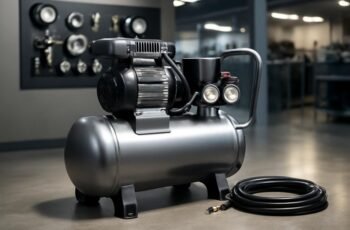
An automotive air compressor is a mechanical device designed to generate and deliver compressed air for various vehicle functions, such as inflating tires or powering pneumatic tools. It operates via a piston or rotary mechanism, which compresses atmospheric air into a storage tank. Proper compressor installation is essential for safe, efficient operation, ensuring that connections are secure and electrical components are correctly wired. Air compressor safety involves monitoring pressure levels and avoiding overheating, which can lead to system failures or hazards. Regular maintenance, including checking for leaks and inspecting seals, helps prevent accidents. Understanding the technical aspects of how compressors work enables users to operate and service them effectively, ensuring reliable performance and compliance with safety standards.
Key Factors to Consider When Choosing a Vehicle Air Compressor
When selecting a vehicle air compressor, it’s vital to evaluate several technical specifications and operational features to guarantee peak performance and compatibility with your vehicle’s needs. Key factors include airflow rate (CFM), maximum PSI, power source compatibility, and duty cycle, which determine the compressor’s capacity and durability. Additionally, consider available air compressor accessories, such as inflation kits or mounting options, that enhance versatility. Environmental impact also plays a significant role; opt for models with energy-efficient motors and reduced noise levels to minimize ecological footprint. Proper assessment of these factors ensures reliable operation, prevents overloading, and aligns with eco-conscious practices, ultimately delivering a tailored solution that balances performance, longevity, and environmental responsibility.
Types of Automotive Air Compressors: Which One Fits Your Needs?
When selecting an automotive air compressor, we must consider whether a portable or stationary unit best suits our workspace and mobility needs. Additionally, choosing between oil-lubricated and oil-free designs impacts operational longevity and maintenance requirements. Evaluating these technical distinctions guarantees we identify the compressor optimized for performance and durability.
Portable vs. Stationary Compressors
Choosing between portable and stationary automotive air compressors depends on your specific needs and usage patterns. Portable models are lightweight, compact, and designed for mobility, making them ideal for on-the-go repairs or temporary inflation tasks. They often feature rugged construction and a utilitarian design aesthetic, prioritizing function over form. Stationary compressors, on the other hand, are larger, more powerful units intended for consistent, high-volume use. They typically have a more polished design aesthetic suited for workshop environments, and their durability is reinforced by reputable brand reputation. When selecting, consider how often you’ll use the compressor, space constraints, and your preferred brand reputation. Both types offer distinct advantages aligned with their design features, ensuring you choose the right model for your specific automotive needs.
Oil-Lubricated vs. Oil-Free
Selecting the right type of automotive air compressor involves understanding the differences between oil-lubricated and oil-free models, as their internal mechanisms considerably impact performance and maintenance. Oil-lubricated compressors utilize oil to reduce wear and heat, offering durability and quieter operation, with superior design aesthetics that often reflect high-quality craftsmanship. Conversely, oil-free compressors eliminate oil contamination risks, making them ideal for clean environments and reducing environmental impact. Their compact design and lower maintenance needs make them suitable for portable applications. However, they typically generate more noise and may have shorter lifespans.
- Durability and longevity considerations
- Noise levels and operational environment
- Maintenance frequency and complexity
- Environmental impact and emissions
- Design aesthetics and form factor
How to Determine the Right CFM and PSI for Your Vehicle?
Understanding the correct CFM (cubic feet per minute) and PSI (pounds per square inch) specifications for your vehicle is vital to guarantee peak air compressor performance. To determine these, start by evaluating your vehicle’s air filter system and tire pressure requirements, as these directly influence compressor capacity. Most automotive tasks, such as adjusting tire pressure or operating air tools, require specific PSI levels, typically between 90-150 PSI. CFM is essential for continuous or high-demand tasks; for instance, inflating tires or powering pneumatic tools demands higher CFM ratings. Always review your vehicle manufacturer’s specifications and consider the air filter’s ability to maintain clean airflow. Matching the compressor’s CFM and PSI to these needs ensures efficient operation and prevents strain on the compressor, optimizing longevity and performance.
Portable vs. Fixed Air Compressors: Pros and Cons
When comparing portable and fixed air compressors, we evaluate mobility and convenience against power and capacity, as each design offers distinct advantages. Portable units excel in ease of transport and on-the-go use but often have limited airflow and pressure capabilities. Fixed compressors provide higher performance and continuous operation, yet they lack the flexibility required for dynamic or remote applications.
Mobility and Convenience
Portable air compressors offer unmatched mobility, allowing users to quickly move them between locations and access compressed air in remote or confined spaces. This flexibility enhances convenience, especially during roadside repairs, where traffic congestion can delay assistance. Their lightweight design facilitates swift relocation, supporting efficient maintenance routines and minimizing downtime. However, portability can sometimes compromise stability during operation, which is critical for consistent air delivery. Fixed compressors, while less mobile, provide robust performance and are ideal for workshops or garages. They eliminate the need for frequent repositioning, ensuring continuous operation. When considering mobility and convenience, it’s crucial to evaluate the following factors:
- Ease of transport and setup
- Stability during use
- Suitability for remote or confined spaces
- Impact on traffic congestion management
- Contribution to overall road safety during roadside emergencies
Power and Capacity
How do portable and fixed air compressors compare regarding power and capacity? Portable units typically offer lower CFM (cubic feet per minute) ratings, suitable for tire inflation and light tasks, with limited air quality control and safety features. Fixed compressors provide higher power output and larger tank capacities, ideal for continuous use and maintaining ideal air quality standards in workshops.
| Feature | Portable Compressors | Fixed Compressors | Use Cases |
|---|---|---|---|
| Power Output | 1-3 HP, lower CFM | 5+ HP, higher CFM | Light tasks vs. industrial applications |
| Capacity | Small tanks, 1-6 gallons | Large tanks, 20+ gallons | Mobile, on-the-go vs. stationary use |
| Air Quality | Limited filtration, basic safety features | Advanced filtration, safety interlocks | Short-term use vs. long-term, consistent airflow |
| Portability | High, lightweight | Low, fixed installation | Rapid deployment vs. permanent setup |
| Safety Features | Minimal, basic pressure regulation | Enhanced safety, air quality controls | Basic safety vs. comprehensive protection |
Understanding Noise Levels and Power Sources in Air Compressors
Understanding noise levels and power sources is essential for selecting an air compressor that meets both operational and environmental requirements. Noise levels directly impact work environments, affecting operator comfort and compliance with noise regulations. Power sources determine the compressor’s mobility, installation needs, and energy efficiency.
Key considerations include:
- Decibel ratings: Lower dB ratings minimize noise pollution.
- Electric vs. gas-powered: Electric compressors are quieter and suited for indoor use; gas-powered units offer portability for outdoor applications.
- Voltage requirements: Compatibility with existing electrical infrastructure reduces setup complications.
- Run-time and fuel consumption: Gas models may provide greater autonomy but often at higher operational noise.
- Environmental impact: Electric models produce no emissions, aligning with eco-friendly standards.
Choosing the right combination enhances performance while respecting environmental and workplace standards.
Tips for Comparing Prices and Finding the Best Deals
To effectively compare prices, we recommend monitoring market trends and tracking fluctuations over time to identify genuine value. Recognizing seasonal discounts, such as holiday sales or end-of-year promotions, can yield significant savings. Additionally, evaluating warranty coverage options guarantees you maximize long-term reliability and protection alongside upfront costs.
Track Market Prices
Tracking market prices effectively requires a systematic approach to comparing offers across multiple vendors and platforms. By analyzing market trends and understanding pricing strategies, we can identify fluctuations that influence ideal purchase timing. To guarantee accuracy, consider these key steps:
- Monitor real-time price fluctuations via online tracking tools
- Cross-reference prices across different retail channels and marketplaces
- Analyze historical data to identify consistent pricing patterns
- Evaluate vendor reputation and reliability in pricing transparency
- Adjust for potential hidden costs like shipping or warranties
Employing these techniques allows us to detect subtle shifts in market dynamics, helping us secure the best deal. Staying informed about market trends and pricing strategies ensures our purchasing decisions are data-driven, minimizing costs while maximizing value.
Identify Seasonal Discounts
Seasonal discounts present strategic opportunities to acquire automotive air compressors at reduced prices, often aligning with manufacturer promotions, holiday sales, or end-of-season clearances. Recognizing these periods allows us to optimize cost savings and secure higher-quality units within budget. To effectively compare deals, monitor retailer websites and subscribe to promotional alerts.
| Promotion Type | Typical Timing |
|---|---|
| Holiday Promotions | Black Friday, Cyber Monday |
| End-of-Season Sales | Fall, Winter |
| Manufacturer Deals | Spring, Summer |
Compare Warranty Offers
When comparing warranty offers on automotive air compressors, it’s vital to examine the coverage details, duration, and limitations of each plan. Proper evaluation of warranty coverage guarantees you understand what repairs or replacements are included, and whether exclusions apply. Service agreements vary considerably, so evaluating their scope helps avoid unexpected expenses. Key points to contemplate include:
- The length of the warranty coverage period
- Specific components covered under the service agreement
- Any deductibles or co-payments involved
- Manufacturer or authorized service center support
- Conditions that void the warranty, such as improper installation or misuse
Maintaining Your Air Compressor for Longevity and Performance
Regular maintenance is essential to guarantee your air compressor operates at peak efficiency and has a long service life. Adhering to a strict maintenance schedule ensures all components, including filters, belts, and valves, function at their best. Regularly inspecting and replacing air compressor accessories such as pressure relief valves and lubrication systems prevents wear-induced failures. Lubrication is critical; use manufacturer-recommended oils to reduce friction and heat buildup. Drain condensate from tanks daily to prevent corrosion and moisture damage. Keep belts properly tensioned and replace them when signs of wear appear. Monitoring operating temperatures and pressure levels helps identify potential issues early. Implementing these detailed maintenance practices not only prolongs the compressor’s lifespan but also maintains consistent performance, maximizing your investment.
Common Mistakes to Avoid When Buying an Automotive Air Compressor
Purchasing an automotive air compressor requires careful consideration to avoid costly errors that can compromise performance and longevity. One common mistake is neglecting the compressor’s duty cycle; oversizing can lead to overheating and increased wear. Failing to assess power requirements may result in inadequate airflow, impacting safety and efficiency. Overlooking maintenance tips can cause premature failure, while ignoring safety precautions risks injury or damage. Additionally, selecting a model without proper noise insulation can create operational hazards.
Carefully assess duty cycle, power needs, and safety features to ensure reliable, long-lasting automotive air compressor use.
- Ignoring airflow capacity and pressure ratings
- Underestimating electrical power needs
- Overlooking cooling and ventilation requirements
- Neglecting compatibility with existing tools
- Overlooking safety features and safety precautions
Avoid these mistakes to guarantee reliable operation and maximum lifespan of your compressor.
FAQs About Automotive Air Compressors: What You Need to Know
Are you unsure about the key features and specifications to contemplate when selecting an automotive air compressor? Understanding the interior features, such as control panels, noise levels, and portability, is crucial for maximum use. Additionally, evaluating the brand reputation helps guarantee reliability and quality, especially since well-established brands often offer superior durability and support. Look for compressors with precise pressure gauges, efficient cooling systems, and robust construction materials. Compatibility with your vehicle’s tire size and intended usage, whether for emergency or routine inflation, influences your choice. By focusing on these technical details, you can avoid pitfalls associated with subpar models and make an informed decision that balances performance, longevity, and safety.
Frequently Asked Questions
Can I Use a Car Tire Inflator as an Automotive Air Compressor?
Yes, you can use a car tire inflator as an automotive air compressor, but consider compressor portability and tire inflation needs. Tire inflators often lack the power or capacity for extensive tasks, making them suitable mainly for quick, small inflation jobs.
How Long Can I Run an Air Compressor Continuously?
We can run an air compressor for about 30 minutes continuously, considering cooling needs and noise levels; for example, high-capacity models with proper ventilation handle longer runs efficiently, but overheating and noise increase without adequate cooling.
Are Electric Air Compressors Safe for Indoor Use?
Electric air compressors are generally safe for indoor use if they meet proper indoor safety standards and have adequate ventilation; guarantee electrical requirements are compatible with your power supply to prevent hazards and ensure reliable operation.
What Accessories Are Essential for My Automotive Air Compressor?
Think of your compressor as a ship; essential accessories are the anchor and compass. An air filter prevents debris, while a pressure gauge monitors output, ensuring safe, precise operation for peak performance and longevity of your compressor.
How Do I Troubleshoot Common Issues With My Air Compressor?
We troubleshoot common air compressor issues by following maintenance tips, like inspecting for leaks and cleaning filters, while adhering to safety precautions such as disconnecting power before servicing. Regular checks guarantee peak performance and prevent malfunctions.
Conclusion
In summary, selecting the right automotive air compressor requires careful analysis of your vehicle’s specific needs and understanding key specifications like CFM, PSI, and duty cycle. Did you know that a high-quality compressor can extend the lifespan of your tires and tools by up to 30%? By prioritizing safety features, maintenance, and seasonal deals, we can guarantee reliable performance and long-term value. Making an informed decision ultimately enhances safety, efficiency, and overall vehicle care.